Customs Regulations

Each country has varying rules about what you are allowed to bring into their country, if you are travelling between European countries the rules are usually less strict than if you travel further afield.

Nevertheless, customs regulations can be extremely strict, and if you are caught with a banned item or substance, you could face a hefty fine, arrest and even imprisonment.

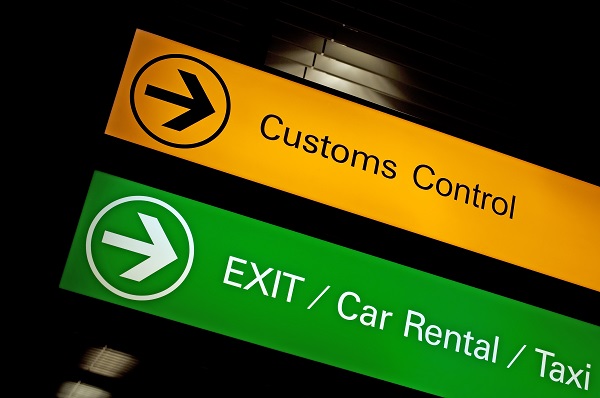
Customs control sign

Before you depart, do some research or check with the airline to make sure, but to be safe, do not travel with these items;

  • Drugs, including steroids and banned substances. If you need prescription medication, in some countries you may need to produce a prescription to prove you need it.
  • Fruit and Vegetables.
  • Meat and Fish.
  • Dairy Products.
  • Natural products such as shells, coral and some types of wood.
  • Plants and plant products.
  • Animals.
  • Weapons.
  • Obscene Materials.
  • Large sums of cash – without declaring it.
  • Large amounts of cigarettes, alcohol and gifts – without declaring them.

Airport Guide

The airport usually marks the beginning, and end of any trip – unfortunately these parts tend to be the most stressful and annoying.

Airport delays are getting longer, and their prices are getting more expensive, meaning that the dreaded airport experience is only set to get worse. Below are our top tips for surviving the airport;

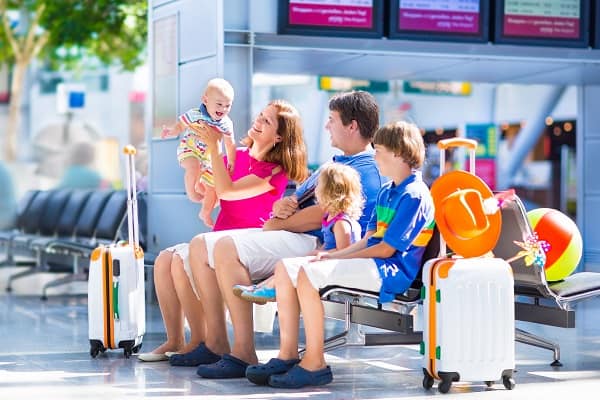
Family at airport

Luggage

Luggage raises the most uncertainty among passengers, and also causes delays, fines and upset. What is allowed is hand luggage? What weight allowance is allowed? How do I transport valuables safely? How can I make sure my luggage arrives safely at my destination?

1) You should not pack anything into your hand luggage which could cause harm or alarm to fellow passengers, for example; razor blades, knives and pen knives, scissors, needles, bats, cutlery, toy or fake guns. Liquids over 100ml are also not allowed. Check your airport’s or airline’s website for more information.

2) Weight and size restrictions can be found on the airline’s website, and are usually displayed when you are booking the flight. Weight your luggage on your scales before you leave for the airport, to avoid any nasty fines.

3) Laptops should always be carried in your hand luggage – never put them in your case. It doesn’t matter how much padding you put in, they are extremely likely to be damaged. Always leave valuables at home if possible, but if you must bring them, keep them with you at all times.

4) Always padlock your case, and put a label with your contact details on the outside, and a duplicate copy in the pocket of your suitcase (in case the outer one falls off). Many cases look the same, so put something distinguishing on yours to stop someone else picking it up by accident – tying a colorful scarf or tie around the handle is always a good idea.

Check in Online

Most airlines now offer the option to check in online, if you can, doing this before you arrive at the airport could save you some time. All you will need to do is drop off your bags at the appropriate desk.

Timing

Most airlines open check in desks two hours before the set departure time of the flight, so to be safe, always aim to get to the airport two hours before your flight is due to leave. Although this does mean you could be sitting around for a while, it also gives you a cushion if you get stuck in unexpected traffic, or forget something. Airlines will usually be unsympathetic if you are late; it is your job to get there on time.

Parking

Parking at the airport can be extremely expensive, look up deals on the internet or research alternative modes of transport, for example a taxi or the train.

Security checks – be prepared!

Security always seems to be the slowest part of the journey through the airport. You can speed up the process by being prepared. Make sure you remove your belt, the contents of your pockets, and your laptop from your bag, and then place everything in the trays provided.

Remember that any liquids must be removed from your hand luggage, put in a transparent bag (available at security) and put in the tray.

Pay attention, if they ask you to remove your shoes, or walk through the scanner again, make sure you do so quickly. Collect your possessions and go to the designated area provided to put everything back.

Delays

Unfortunately, if your flight is delayed, there is not much you can do;

1) Ask a member of staff if they can give you any further information
2) keep an eye on the departures screen
3) Keep calm
That is about it. If your flight is delayed, why not pamper yourself and invest in a one day pass to the departures lounge? You will get comfortable seating, peace and quiet, snacks, newspapers and the lounge assistants will update you about the status of your flight.

Don’t be too distracted by duty free

Keep checking the departures screen and listening for announcements, otherwise you could delay the flight.

Missing Luggage

If your luggage does go missing, alert airport staff and they will direct you to a desk to lodge the loss. Then call your travel insurance company, and they can advise you on what to do next.

Further Transport

Make sure you have planned transport from the airport to your accommodation. For example if the hotel are sending transport to pick you up, where are you meeting them? Do you need to show them anything? If you plan to travel by taxi, make sure you have currency ready.

Have a great trip!

Packing Tips

Packing can be one of the most stressful parts of going away; finding the balance between packing too much and not enough is very difficult.

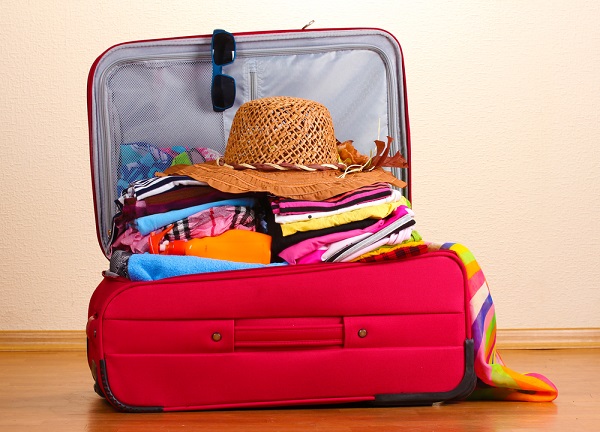
Suit-Case2

Here are our top 10 useful tips to stress free and successful packing:

1. Forget everything you knew about packing, do not fold your clothes, roll them to reduce space and prevent creasing.

2. Remember that airlines have size and weight restrictions on hand and hold luggage, check and weigh your luggage before you leave home to avoid expensive fines.

3. Remember that you cannot pack these items in your hand luggage;

  • Anything which could cause harm to fellow passengers, for example; razor blades, knives and pen knives, scissors, needles, bats and pool cues, cutlery etc.
  • Toy or fake guns as they could cause alarm.
  • Liquids over 100ml.

4. Decide what you actually need and what you could live without, put outfits together before you leave, with accessories and shoes etc. Not only will this save space it will also save you the stress of having nothing to wear despite the suitcase full of clothes.

5. Mix and match your clothes, a maxi dress looks great on the beach and for a night out.

6. Always carry a change of clothes and any vital possessions (as long as they are allowed, see point three) in your hand luggage. Not only will this save space it will also cushion the misery if your case goes missing.

7. Wear your bulkiest things on the plane, this may sound silly but it will save you lots of room and bulky coats make great pillows for the journey.

8. Don’t pack things that are dry clean only, or things that will need loads of ironing, it’s just not worth it. Pack suitable clothing and ALWAYS remember to pack comfortable shoes.

9. Always leave room in your case, no matter how hard you try; you may come home with souvenirs and purchases, and you need to fit these in your case to get them home.

10. Think outside the box;

  • Instead of buying massive bottles of shampoo, find some small water tight containers to transport products in your case; it is cheaper than buying them abroad.
  • Don’t buy massive guide books and maps, get the information you need from the internet and print it off or store it on your phone

The final rule for successful packing is to remember to pack your important documents, for example your travel insurance documents in your hand luggage.

For more tips, check out our handy Packing Guide Video

Guide to Avoiding Huge Mobile Phone Bills Abroad

There is nothing worse than returning from a wonderful holiday to immediate stress and panic. No one wants massive bills simply for using their phone in another country, but it is important that you are aware of how you can prevent these bills.

Gadget

This is our guide to avoiding huge phone bills whilst abroad;

  1. First and foremost, if you are travelling abroad, turn off data roaming on your phone. This should prevent your phone from downloading things in the background and racking up enormous bills.
  2. If you frequently visit the same country, it could be worth investing in a local pay-as-you-go SIM card for your phone, that way you will pay local prices and should avoid horrendous bills.
  3. To avoid any nasty surprises, contact your network and check how much they charge for roaming in your chosen destination, especially if you exceed your limit. Some companies enforce a cut off limit when you reach your internet limit abroad – you need to check if your company does this, and again if they do it in your destination (sometimes it is only in Europe).
  4. Try to find free local Wi-Fi whilst abroad, as opposed to using your mobile network. If unsure, check how you can do this before you depart.
  5. You are charged for receiving calls, voicemails and texts as well as making them. Let your friends and family know that you will be away, and not to contact you unless it is an emergency. You can also contact your network and disable your voicemail service while you are away.
  6. If your phone is stolen abroad, contact the Police, your travel insurance and your network immediately to report the theft and to stop your credit being used.The EU is trying to cut down on these charges, so hopefully this shouldn’t be a big issue in the future. However, the tips above are good practice to save you some money and stress, plus it’s always nice to ignore your phone whilst on holiday. Good luck!

Travel Insurance Buyers Guide

Travel Insurance can seem like a boring and unnecessary item, why spend money on insurance when you could spend it on holiday clothes and drinks? However, travel insurance should really be at the top of your priority list; in fact you should purchase travel insurance as soon as you have booked flights and accommodation, to ensure you’re protected against unexpected cancellation costs.

Quality travel insurance will protect you if you have to cancel your holiday due to sudden illness or injury. It will also provide cover if you become ill or injured, or if you lose your vital possessions or travel documents whilst you are overseas – without insurance these holiday disasters could cost you thousands of pounds.

Read more

Visas, GHIC/EHIC & Passport Information

Since Brexit, rules around travel to Europe continue to evolve, particularly following the UK’s exit from the EU and the introduction of the new border systems. Visit the Government website for up to date information on passports, GHIC/ EHIC, healthcare and more. We recommend checking official sources before every trip to ensure you have the latest information.  

Do I need a Visa to travel?

When planning any trip it is extremely important that you check whether you need a visa to enter the country. You can do this online, with your travel agent or with the Consulate or Embassy of the country you are planning to visit. Some countries offer visas on arrival or electronic visas (eVisas), but requirements vary and should always be confirmed.

You will normally have to fill out a form, providing information about yourself, your trip and your background, plus a passport sized photo. In many cases, applications are now completed online without needing to send your passport. Make sure you do this in plenty of time, as it could take several weeks to get your visa approved. Some visas are easy to obtain and others are more difficult. Always ask for help from the Embassy or a travel professional if you are unsure.
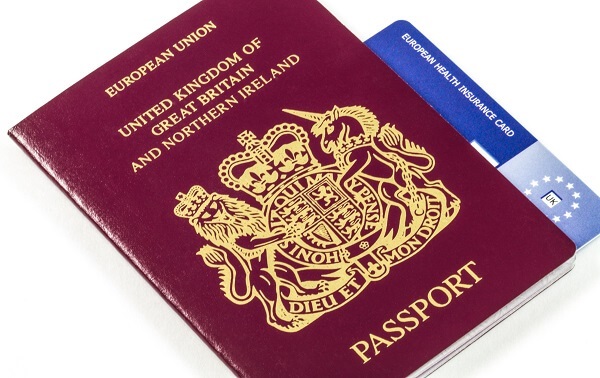
A visa is an official document or stamp proving that you have been granted permission to enter the country. A visa will usually determine;

  • How long you are permitted to stay in the country
  • Whether you are permitted to work or study
  • Where you are allowed to travel

Plus much more.

If you are planning to travel, work, get married or study abroad you must make sure you have the correct type of visa.

If you do not have the correct paper work you will not be allowed to enter the country, which will make your trip short and expensive. It is your job to make sure you have all the correct documentation in place before you arrive.

Some countries are constantly changing their rules and regulations regarding visas and border control. View the latest Foreign, Commonwealth & Development Office (FCDO) travel advice for specific countries here. Remember that a visa does not always guarantee you entry into a country.

What is the EU Entry / Exit System (EES)?

The EU’s Entry/Exit System has been introduced in phases and will apply to some non-EU travellers, including UK citizens, entering participating European countries. Travellers may be required to register biometric information, such as fingerprints and a facial image, at the border. Requirements and implementation dates may change, so travellers should check the latest official guidance before departure. You can find out more about what to expect with the EU’s Entry/Exit System (EES) on our dedicated EES information page.

What is ETIAS?

If you are travelling to the Schengen Area, UK travellers may need to apply for an ETIAS (European Travel Information and Authorisation System) waiver once introduced (this is currently scheduled for roll out at the end of 2026). Always check current requirements before travel.

GHIC/ EHIC

If you’re travelling within the European Union, make sure you have a valid Global Health Insurance Card (GHIC) or European Health Insurance Card (EHIC). The EHIC replaced the old E111 form in 2006. Both cards are free and can be applied for via the NHS website.

If you need medical treatment whilst abroad, the GHIC/ EHIC should entitle you to free or discounted health care in European countries, and some additional countries; however, cover may vary by destination.

If you need health care whilst travelling, make sure you visit a state hospital and take your GHIC/ EHIC and Passport as proof of EU citizenship. In some European countries, such as Spain, you may be directed to a private clinic instead of a state facility; however the GHIC/ EHIC is only recognised by state hospitals.

Remember that the GHIC/ EHIC is not a substitution for travel insurance – it will not cover you for repatriation or private treatment. You should always make sure you invest in quality travel insurance before you depart for your holiday.

If you already have an EHIC, it remains valid until its expiry date. After this, you will need to apply for a GHIC. Cards typically last up to 5 years.

For further information and to apply for an EHIC, please click here.

Passports

Most travellers are familiar with passports, but for anyone who is unsure or has a query, we have collated our top tips and advice concerning passports; whether that is renewing, travelling or reporting one stolen.

• A passport is an official document which allows you to travel to other countries.

• You can renew your passport at any time, however extra validity is no longer added when renewing early.

• Passport fees are subject to change; make sure to check the latest costs on GOV.UK before applying.

• A passport applications typically take several weeks, but processing times can vary, especially during peak periods. Apply well in advance of travel.

• Even when visiting EU countries you should take a passport. UK citizens cannot use national ID cards for EU travel and must carry a valid passport.

• If you’re flying, most airlines now want to see your passport as proof of ID even if you’re using a domestic flight.

• Check that your passport will not expire during your trip.

• Many countries require your passport to be valid for at least 3-6 months beyond your return date and issued within the last 10 years. Always check entry requirements for your destination.

• Take a photocopy of your passport, visas and any other important documents. Make a note of passport numbers, dates and where they were issued. Also take a note of your travel insurance policy number.

• When you reach your destination, keep your passport and travel documents in a safe place (the hotel safe if possible), don’t carry them around with you if you can avoid it.

• Some countries ask you to carry your passport as a form of identity card, check if a photocopy would suffice, if you do need to carry the original make sure you leave a photocopy in the hotel safe.

• Should your passport be stolen, your travel insurer will offer advice on how and where you can get a replacement passport. You should report the theft to local police and obtain a police report, then go to your local embassy who should be able to cancel your passport and issue you with emergency paperwork, there may be a fee and background checks involved in this.