Local Customs and Laws

When planning a trip overseas a little bit of research can save you an enormous amount of embarrassment, and money. The number of Brits arrested abroad rises every year, and no-one wants to spend their holiday in a foreign prison or incur heavy fines because they’ve upset the local populace by flouting local customs and by-laws.

Legal

Here are our top tips for avoiding encounters with the law abroad;

  • Be careful what you wear. In some countries, such as Egypt, women are expected to keep their arms, legs and torsos covered.
  • Whilst it is acceptable throughout most of Europe for women to sunbathe topless, it is not acceptable in most Arabic and Indian countries and also in many parts of the USA.
  • Also watch your footwear. In some places women are banned from wearing high heels/shoes at historic or religious sites. In some countries it is offensive to walk around in bare feet.
  • In countries such as Thailand, you are expected to carry your passport or ID with you at all times. If you fail to produce ID when asked you could be arrested and/or fined.
  • Remember your manners. In some countries you can be fined for swearing, spitting, chewing gum and littering. In Hong Kong you will be fined for littering and spitting.
  • Sex in public is never acceptable and in Arabic countries it is punishable by imprisonment and a hefty fine.
  • Mooning or streaking on holiday will always result in arrest and a fine.
  • The FCDO recently alerted gay travellers that homosexuality is still unfortunately illegal in some popular travel destinations.
  • In some countries, such as Greece and Spain, it is now illegal to smoke in indoor public places.
  • In France all drivers and motorcyclists, (including foreign visitors,) are required by law to carry breathalysers in their vehicle. Anyone who does not comply will incur an immediate fine.

It is important that you familiarise yourself with local laws and customs before you go away. For the latest travel advice from the Foreign, Commonwealth & Development Office (FCDO), check our handy Know before you go page.

Keeping in Contact Abroad

Modern travellers rely on their mobile phones not just for games and apps, but as a means of communication. However, just bringing your mobile phone along for your travels does not necessarily mean you will be able to stay in touch, or contact anyone in an emergency.

Message in a Bottle

Here are our tops tips to make sure you stay in contact abroad;

  • Make sure your phone can receive calls, and make outgoing calls abroad – it may sound obvious, but many people do not realise that their phone contract or SIM card has not been set up for use abroad. You can change this with a quick call to your phone provider, who can update your details.
  • Make sure you have enough credit – if you don’t have a phone contract, make sure you have enough credit on your phone to make and accept calls at all times. You should also make sure you can top up your phone wherever you are.
  • Skype is not great for emergencies – many travellers rely on Skype to stay in touch with people at home during their trip, and although Skype is a great way of staying in contact, the line can be unstable, so it is not a great medium for contacting people in an emergency.
  • Always charge your phone before you leave your accommodation each day – again it may sound obvious, but you would be surprised how quickly your phone’s power starts to drain during an emergency situation. Make sure it is fully charged each day.
  • Turn off any apps or games that you are not using – lately there has been a lot of media coverage about escalating mobile phone bills because of apps running in the background. Avoid draining your credit and battery by turning these apps off.
  • Make sure you know important phone numbers – before you leave for your trip, save important contact information into your phone book (as well as noting them down in a separate place in case your phone dies). You should make sure you know what number to call in an emergency, (for example 112 is the international number to contact the Police or an Ambulance), as well as your travel insurance provider’s emergency medical helpline. You should contact both as soon as possible in a medical emergency.

Some of these points may seem over cautious, however if you do face an emergency abroad, you will soon realise how much you need to rely on your phone. Your travel insurer will always endeavour to help you if you face a medical emergency, however communication can easily break down if they cannot contact you.

Safe travels!

Top Tips for Solo Travellers

Going on a solo trip can seem like a frightening experience. However, some people may find it to be one of the most enjoyable experiences of their life. Travelling alone means you don’t have anyone else influencing your decisions, preferences or plans and you can truly indulge yourself in new experiences. Of course, there are safety risks associated with travelling alone so make sure you stay smart on your travels and still have fun.

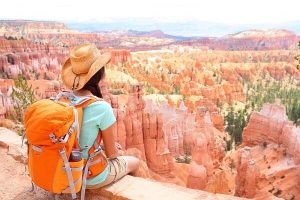
Backpacker

Look the part

While it can be tempting to dress like a tourist and carry a guide book around wherever you go, try not to come across as someone who has no idea where they are going. This can give you an air of vulnerability and make you a target for unsavoury people. Act like you blend in and are not new to the area.

Walking with confidence and purpose will make you look as though you know the area well, even if you don’t. Keep your wits about you and try to avoid making yourself a target. If you are lost, don’t be afraid to ask for directions but imply you are meeting somebody at your destination so it doesn’t become apparent that you are travelling alone.

Avoid extra expenses

Travelling solo often means you fall victim to the single supplement. Often applying to hotels, the supplement can mean you end up paying up to twice as much as someone who’s travelling with a partner. There are companies that offer room-mate services whereby you are paired up with someone in your room and don’t have to pay the supplement. This can save you a fortune but do your research to find out who you will be sharing a room with.

Embrace your freedom

There are some people who say travelling alone will be lonely but that absolutely doesn’t have to be the case. When it comes to eating out, don’t be afraid to talk to the restaurant staff. They will give you a real insight to the local area and may introduce you to some new friends along the way.

If you feel awkward eating alone, you can always order room service or take a book along with you. There will probably be ex-pat bars in a lot of places so if you are feeling uncomfortable then head for one of these to feel a bit more relaxed.

Rest up

You might find yourself feeling drained after a while into your trip. Constantly having to be vigilant to your surroundings can start to feel exhausting after a few weeks so consider taking a step back when this happens. Put your itinerary on hold for a couple of days and slow things down. You might even want to remove a few things from your travel plans and check into a spa for a day or two. It’ll let you recharge you batteries and remove some of your worries for a while.

Stay in touch

However long you are away for, make sure you touch base with family and friends regularly. Give them a detailed version of your itinerary before you leave and try to call, email or text every other day so that they know you are safe. While it’s not likely that anything bad will happen, making regular contact will put their minds at rest and also ensure you keep in touch with the people you left back at home.

Top Tips for Avoiding Backpacker Travel Theft

Having your belongings stolen is a traumatic and upsetting experience that can happen to anyone. When you’re travelling, there is a chance that you will become the victim of theft, but there are things you can do to cut down on the risk and potentially make you feel safer while you’re away. Read more

10 Incredible Places You May Have Never Heard of…

The World is an intriguing place with an abundance of natural beauty and unexplainable evolution. We have been gifted thumping waterfalls, expansive canyons and exquisite reefs. Many of which have been turned into desirable tourist attractions and must-see places. Some would describe them as bucket-list-style destinations, but how about the lesser-known places that are yet to be thrust under the spotlight? Here is our pick of 10 incredible places you have never heard of…

Neuschwanstein Castle, Germany

This beautiful nineteenth-century castle sits elegantly atop a rugged hill above the village of Hohenschwangau near Füssen in southwest Bavaria. Intended as a personal refuge for King Ludwig II it was opened to the public after his death in 1886.

If you think the look of this castle looks strangely familiar you maybe recognise it as the main inspiration behind Disneyland’s Sleeping Beauty Castle.

Attracting over 1.3 million visitors annually, this is one of the better-known destinations on this list, but is still well worth an inclusion.
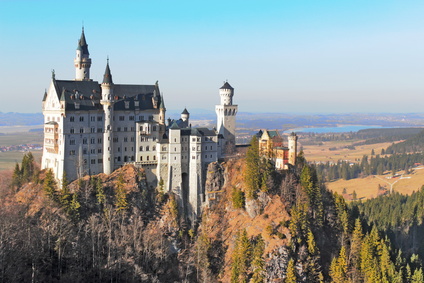
Schloss Neuschwanstein

Giant Crystal Cave, Mexico

300 metres below the surface of Chihuahua in Mexico lays one of the most amazing natural formations ever discovered. Caves containing the largest selenite crystals ever found, reaching 11 metres in length and 4 metres wide.

These crystals are believed to have formed some 500,000 years ago with the help of underground magma deposits, heating the water in the caves to a blistering 50°C.

Unfortunately for most, the closest you will get to these fascinating structures are the pictures. Since their discovery in 2000 they have been off limits to the general public, not only for their preservation, but also due to the fact this is an extremely dangerous cave.

Razor sharp rocks, scalding water and heat so unbearable that those who enter can only withstand several minutes before risking passing out (and in some cases dying)

While this is truly a place of beauty, it is one best admired from afar.

Salar de Uyuni, Bolivia

The world’s largest salt flats, located in the Potosí and Oruro departments in southwest Bolivia.

This stunning landscape covers some 12,000 sq km (4633 sq mi) the remaining lake was part of a prehistoric salt lake which once covered most of southwest Bolivia.

This destination has long attracted tourists due to the mirrored effect given by the flats against the clear blue sky and it is certainly an awe-inspiring sight. If you are planning on backpacking in South America this should definitely be on your list.
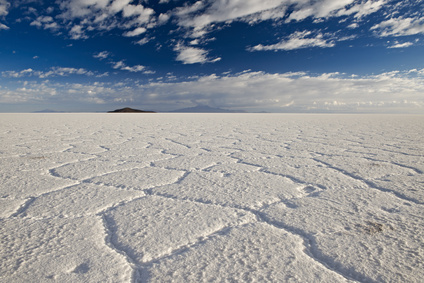
Salar de Uyuni

Burning Crater of Turkmenistan

Dubbed “The Door to Hell” this is a truly terrifying sight, a burning pit in the middle of the Karakum Desert, 230ft wide and 66ft deep which has been raging for the past 40 years, this may not sound like the most inviting of destinations but it is certainly one you will never forget.

The site came about after a Soviet outpost was set up to drill for natural gas in the area. After the initial success of discovering the gas resources; the ground beneath the camp collapsed, having been swallowed into an enormous crater. Amazingly no lives were lost in the accident but they now faced the environmental issue of the large amount of methane gas which was being released from the site.

The decision was made to “burn out” the gas, by setting it alight and burning off the remaining gas, it was expected the gas would burn out after several weeks, but more than four decades later the fire is still burning.

Mount Roraima, Venezuela

Mount Roraima is the highest point in the Pakaraima mountain chain of Tepui Plateau in South America. The plateau boasts borders with Venezuela, Brazil and Guyana with 1,300ft cliffs on all sides.

Since the first recorded person to scale the plateau in 1884 it has become a popular destination for backpackers and hikers. Most hikers who attempt the climb take two days to reach the base of the mountain, then another day to follow the “La Rampa” a natural staircase-like path up to the top.

This is a serious climb and should not be attempted lightly. If you want to reach the top you should take one of the many tours available for tourists.

Chand Baori Well, India

One of the oldest and biggest step wells in the world, Chand Baori looks like a geometry puzzle.

Built during the 8th and 9th centuries by King Chanda, it provided the surrounding areas with a reliable water source for centuries before modern water systems were introduced to the area.

No longer in use, the site is an incredible place to visit to inspect the precision and scale of this 1,000-year-old structure. With steps on 3 sides of the well and the fourth boasting a set of pavilions built one atop another and even a royal residence for the King and Queen and a stage for performing arts this is truly a magnificent place to visit.
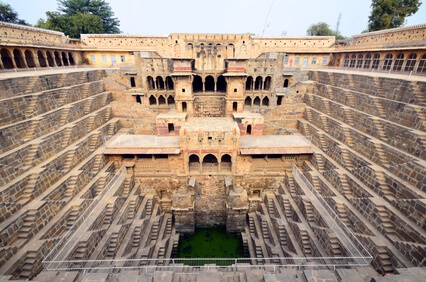
Destination-Chand-Baori-Abhaneri-Village-India-Step-Well

Urup Island, Russia

Protruding from the Pacific Ocean, this uninhabited volcanic island is a breathtaking sight.

Boat trips are available to get up close to the natural stone spire and the other formations in the area. The nearby island also offers beautiful wildlife and stunning waterfalls.

Once inhabited by the Ainu, they believed there are vast amounts of gold under the islands. While this is obviously up for debate, this is still a beautiful place to visit.

Zhangye Danxia Landform, China

“The eye candy of Zhangye” is a range of beautiful maintains offering a kaleidoscope of stunning colours. The Danxia landform is rich with unusual rock formations and colours which have contributed to its popularity over the years.

Formed some 6 million years ago, the mountain gained its current exterior thanks to the erosion of the soft sandstone. Vivid red orange and yellow layers can be seen sweeping through the hills.

The national park offers viewing platforms for the best areas to see what Danxia has to offer, a range of tourist buses and sightseeing cars are available inside the park to ensure you see everything it has to offer.

Keahiakawelo, Lanai, Hawaii

To those who know it, Keahiakawelo is better named the ‘Garden of the Gods’. A rock garden that looks scarily similar to that of a sci-fi movie set. It is located in the Northwest region of Lanai and is made up of boulders and towers of rock. Head over here at dusk to get the most inspiring views of rock towers, spires and formations, created by centuries of erosion. They will glow in exceptional reds and purples. If the weather prevails, you can see the island of Oahu from the high elevations created. The sweep of red rock gardens against a backdrop of the ocean creates stunning sweeping views.

Be warned, that this location is only accessible via a 4-wheel drive and the removal or stacking of rocks found here is forbidden.

…and finally

If you are looking for somewhere a bit further off the beaten track, or away from the usual backpacker and travelling destinations, we recommend doing a bit of further research and having some travel stories to really brag about…These are some of the most beautiful, untouched and quintessential destinations on the World map…

Wildlife Conservation

If you’re an animal lover, you have probably felt one of the following;

  • Wonderment when you see wild animals in their natural habitat
  • Outrage when you hear of cruelty to animals, and especially any threat to an endangered species.
  • In awe of charity projects who fight to protect wildlife all over the world.

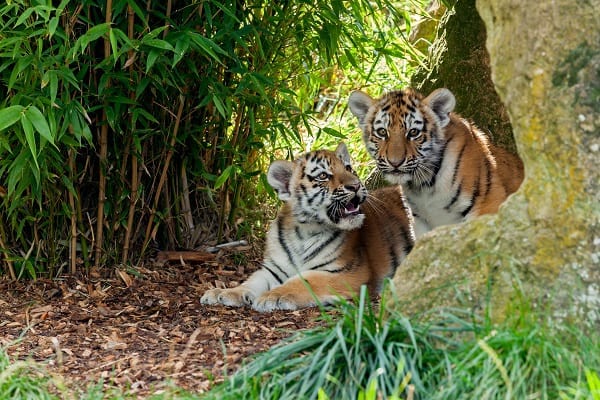
Tiger cubs

If you’re passionate about wildlife and travelling, then a wildlife conservation project could be the perfect adventure for you this year.

Whether you are interested in marine conservation in Madagascar, protecting primates in Costa Rica or helping big cats in South Africa, there is a charity project to suit you. According to WWF there are only around;

  • 20,000 Polar Bears left in the wild
  • 7, 500 Sumatran Orangutans left in the world
  • 3,200 Tigers left in the world
  • 1, 600 Pandas left in the world
  • Less than 250 Vaquita left in the world
  • And most shockingly there are less than 30 Amur Leopards left

This is simply a short list, but there are so many endangered animals that are at risk of extinction or harm. Therefore any help you can offer will be greatly appreciated by the charities that are fighting to protect endangered or threated creatures.

You can research charity projects online which will normally plan the entire trip for you. Just make sure that you fully research the website, charity and country you are visiting, to make sure you get the correct vaccinations and travel insurance for working with animals.

Teaching

If you have a passion for travel, teaching or helping the less fortunate, then teaching abroad could be a perfect adventure for you.

Read more

Community Projects

If you want to truly immerse yourself in a culture abroad, or if you are interested in helping a specific community, then a Community Volunteering Project will be perfect for you.

A community project is the best way to learn about a certain culture whilst you live and work there. By working with these people you will be helping the less fortunate and making sure their way of life survives and thrives.

There are hundreds of communities in need of volunteers, whether you want to work in hospital clinics in Africa or teach children in Brazil, your help will be priceless to these communities. In turn they will reward you by accepting you into their community and educating you on their way of life.

Once you have worked on a community volunteering project, the people, country and project will remain close to your heart forever. You are guaranteed to have an amazing but sobering experience.

Volunteering Checklist;

  • Vaccinations – if you’re planning to work within a community, especially in poorer countries or areas, you need to make sure you’ve had certain vaccinations and have taken preventative medicines. For example, if you’re planning to work in a hospital or clinic, your GP will probably recommend that you have certain jabs to give you extra protection.
  • Travel Insurance – make sure you have quality travel insurance, that will cover you for all of your volunteering activities. Without travel insurance you leave yourself vulnerable to potentially huge bills if you face a holiday disaster.
  • Backpack – you need to ensure that you bring the right things, and the right amount of things, with you for your stay. For example, a first aid kit is always advisable, and especially if you are helping a community that is far away from any towns or hospitals. Furthermore, a community such as this might not have electricity for you to power your phone, so invest in a solar charging pack if this is important to you.
  • Fundraise – when your adventure is booked, why not fundraise at university or work? Any funds, clothes, toys and toiletries people can donate will be put to great use by your community, so get campaigning!
  • Health – remember to look after yourself as well as your new community. Don’t forget to wear sun protection, drink plenty of fluids, and take plenty of rest in the shade if you’re working in a hot climate. Make sure you continue to take any preventative or prescribed medication regularly, and seek medical attention immediately if you feel it is necessary.

WWOOFing

Most Backpacker and Longstay travellers plan their adventures around chances to experience other cultures and ways of life, and unsurprisingly many find themselves seeking work within local communities, either for experience or money.

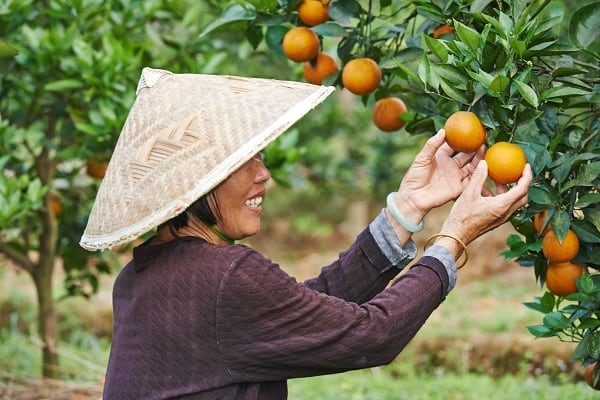
Volunteering farm work

WWOOFing or ‘World Wide Opportunities on Organic Farms’, is basically an exchange programme where people who are interested in agriculture or nature can travel abroad and volunteer for a farm or small holding. In return for hard work, the WWOOF hosts provide food, lodgings and of course the opportunity to learn.

When you start your WWOOFing adventure, you will travel to live with your hosts for a period of time decided by you both, for example you could stop by for three days during a backpacking trip, or you could stay for six months. On average, people usually decide to stay for a couple of weeks, during which time you will be expected to join in with the activities of the host, working around 6 hours a day to pay for your lodgings.

WWOOF programmes are now available throughout the world, and are a great way to travel, learn about a specific culture, and different approaches to agriculture. You could work on a vineyard in France, or harvest mangoes in Bangladesh – the world is your oyster!

The range of activities and jobs available is astounding; you could potentially find yourself…

  • Cutting wood
  • Feeding animals
  • Fencing
  • Gardening
  • Making bread
  • Making cheese
  • Making compost
  • Making mud bricks
  • Making wine
  • Planting
  • Sowing seeds
  • Weeding

Imagine adding those to your CV! The first step is to decide where you want to travel, and what activity you want to participate in or learn more about.

For more information about how to apply for a specific activity, farm or destination, visit WWOOFInternational.org.

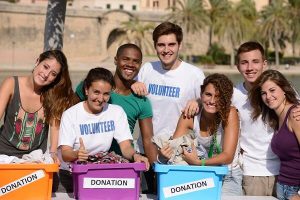
Volunteering

Volunteering in another country is an amazing experience. Not only will you be offering genuine help to a less fortunate community, you will also meet some wonderful people, have the opportunity to travel and gain priceless life and CV experience. Read more